What are the bonds keeping us together? Notes on "Bonding" by Mariel Franklin
In a world fueled by competition, what are the bonds keeping us together? Notes on "Bonding" by Mariel Franklin. Photos by me!

Hi dearest reader,
After months of minimizing my social media to five minute intervals, I found myself watching hours of cute animal videos and viral nonsense like a fiend.
Maybe you’ll relate to this, but over the last two weeks I’ve identified three reasons for why addictive social media behaviors returned with a vengeance:
-
I stopped going on walks where I get to say “good morning” to strangers in nature. (I was too sore from jumping off a cliff to rescue my dog.)
-
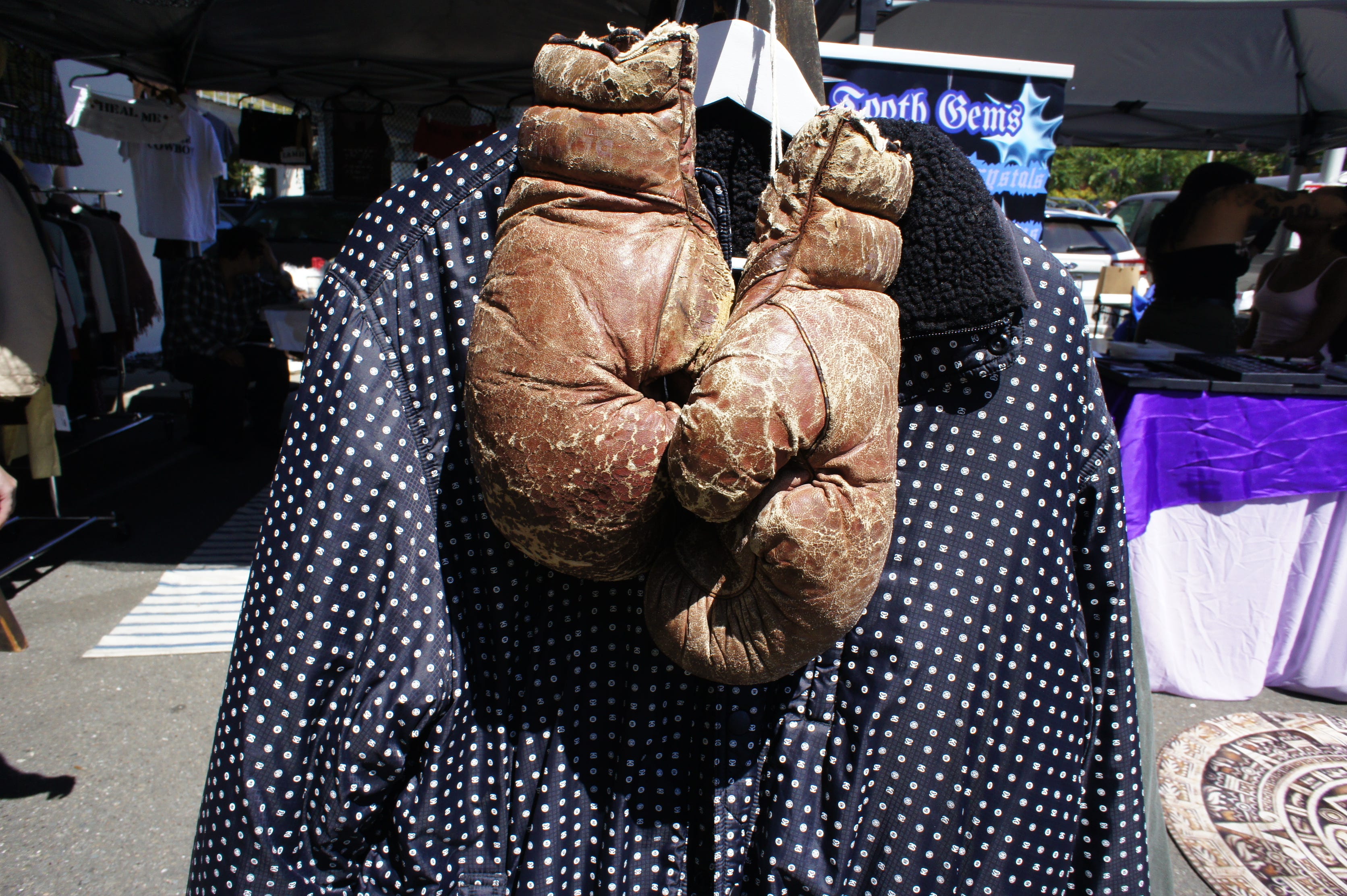
I stopped going to the community market and cafés where I get to commune with strangers in town.
-
The terrible, horrible, no good, very bad1 news that humans seem to be failing at this whole thing called society.
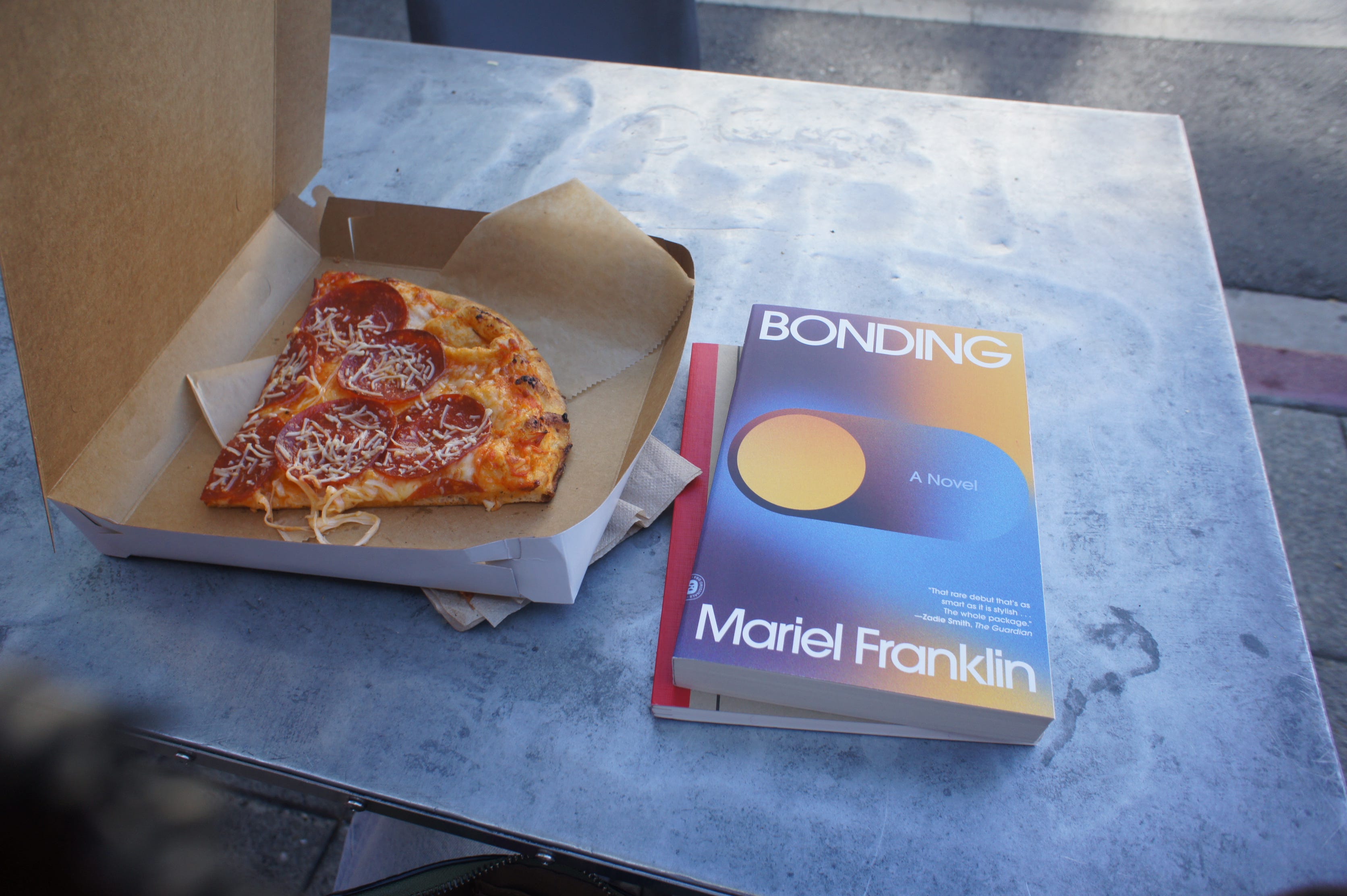
Compelled by the brilliance of Mariel Franklin’s work, I also re-read the opening and ending of her novel, Bonding, during this time, which is all about the weirdness of our society. And within the confluence of these experiences, I’ve realized some things about me and my culture’s need to bond.
(At the end of this letter is the banter writing prompt, please join in when you get there, share your hot takes!)

Bonding is the kind of book you could read thrice over the course of your life and each time discover new, extravagant questions and a fresh uncertainty about Western culture during the Anthropocene.
Franklin quotes Agatha Christie’s novel, And Then There Were None, in the opening chapter: “There was something magical about an island—the mere word suggested fantasy. You lost touch with the world—an island was a world of its own. A world, perhaps, from which you might never return.”
London where Bonding is set is an island city, and Mary’s socioeconomic bubble of industry movers is another kind of island, one of soft sci-fi, where her new lover Tom, and ex-lover Lara, each race to break new ground in technology and pharmaceuticals. You wonder whether all three of them can make it out with their hearts, or heads, intact.
Within Mary’s contemporary world, where individualism is king and social media has control over people’s attention, fruitful relationships for young folks seem improbable, and as Mary says, “no one had any idea how to live.”
Bonding’s driving sentiment is cynicism for the Tech and Pharma “juggernauts”2 influencing UK’s culture for profit, power, and survival (yes, the security of a paycheck). It’s a relatable sentiment for us Americans right now too. Drive into San Francisco today and you’ll be met with dozens of billboards by different companies selling homogenized AI products, billboards casting shadows over the Bay Bridge exit that once had variety—I know because at one point in time I was on two of them during my modeling days in my twenties, smiling over the 80 freeway with a naïveté for what the 2020’s would bring.
In Bonding, Mary thinks about her culture while on the train:
“I looked at the other women in the carriage. We were all doing our best to hold our lives together, all of us sitting there in our cheap clothes, our bags full of gadgets—gadgets that weren't so cheap, each of them silently imposing on us…The problem, as far as I could see, was that the situation wasn't sustainable. None of it was enough on its own. Our salaries weren't enough, our jobs weren't enough and the people in our ‘networks’ weren't enough. It all seemed OK at first, it was even fun up to a point—let's say around my age. Beyond that, life began to bite.”
Mary is on a hamster wheel, recently let go from her job, running to the next one, unsure of what the white collar work is doing for herself, or for society, when it seems that people are becoming lonely and detached, coerced into caring about success more than interpersonal relationships.
With this in mind, let’s do a quick analysis:
-
We are in a strange time, that much is certain, but this is true for every generation who says it.
-
The tech industry is mysterious to the average person and yet their products are pushed onto them anyways with a capitalist value at their core: compete to win the market no matter the costs.
-
If human beings are the market, is the cost our subjectivity?
-
I often worry about shapeshifting into an object depending on who or what is regarding me. Am I a person, or a number to them?
-
We use our number against companies sometimes, like when we boycott Spotify for investing in AI weapons and Disney for their role in censoring Jimmy Kimmel. We know the executives will look at their metrics and see the number is smaller and wonder if they should make an alternative decision to make the number go higher again, and we hope, on the other side of our screens, that decision will be the ethical one we bargained for.
It would seem that despite riding the train together, we’re looking at our screens. And like Mary says, “Even friendship became a struggle over time. Lives diverged. Things fell apart, slowly at first and then with gathering speed. And the truth was, despite the fighting talk, it wasn't at all clear what was supposed to take their place.”
Now that we’ve analyzed Bonding I wonder, and I ask you:
In a world fueled by competition, what are the bonds keeping us together?
After my social media relapse, I noticed a relationship that I’d forgotten, or didn’t take seriously enough, that’d been making me feel whole this entire time. Today I’ve identified it as the bond keeping us together, despite all the competition and the conflict.
The Stranger Bond
As much as strangers compete against each other, they support each other too. It’s a wickedly ironic answer to the question I’ve posed.
As far as I can tell, what I’m dubbing “The Stranger Bond,” might be the most underrated bond there is, a vital value for society to have in a globalized era, and even though in the West we struggle to divest from our exceptionalism, I’ve seen the most beautiful acts of care between strangers over the last few years, in person and online.
We behave like connective tissue for people, even if we don’t know one another intimately. Most of the time The Stranger Bond is mundane and routine, to the point of obscurity, but then there’s the millions of people who champion the wellbeing of strangers every day, in our country and in others, in small ways and in big.
Some days it can feel like The Stranger Bond is attached by a single ligament, when powerful people behave as if strangers are numbers to exploit and eradicate, when in reality they’re humans deserving of rights.
If I could provide a sense of relief here, for myself, and for you, after being immersed in Bonding’s accurately bleak world, it’s that by asking the question, What keeps us together? I’d say it’s our magnificent ability to empathize with the anonymous.
It’s our ability to understand that behind the number is a person, feeling and living, and caring for others.
Using myself as a test case, it’s obvious that interacting with strangers on a daily basis gives my life a greater sense of purpose and community, in person and in online groupings. As soon as I stopped being among people, I instinctively reached for Reels, scrolling through nonsense videos that gave me a quick burst of delight.
This might be why I’m passionate about creating this online space where strangers can connect over a shared interest of books and the intriguing, sometimes life-changing, ideas we find inside them.
Love,
Amani
Banter Below!
What bonds can you identify as being most important in your life right now?
Here’s 3 more ideas I’m throwing out there:
-
The Friend Bond — the girlies just get me
-
The Colleague Bond — teamwork makes the dream work!
-
The Parent Bond — pride in caretaking a youngster (or pet!)
Footnotes:
A parody of the children’s book title, Alexander and the Terrible, Horrible, No Good, Very Bad Day. A must-read, modern classic.
Here quoting Mariel Franklin’s apt use of the word “juggernaut” from our podcast interview that isn’t out yet; the podcast will be out in a few weeks.